In 30 seconds
- Biochar can influence water, nutrients and soil conditions, but results vary.
- Feedstock, production conditions and the receiving soil determine suitability.
- Test, trial and monitor before making it part of a farm-wide protocol.
A farm can buy a great many inputs without buying healthier soil. Soil health emerges from relationships: roots, organisms, water, organic matter and the way land is managed. Any product that claims to replace those relationships deserves a better question.
Biochar can be useful within this picture. It can also be disappointing when treated as a universal remedy. The sensible starting point is not “How much should we buy?” It is “What problem are we trying to change, and what would count as improvement?” That question makes room for biology, economics and evidence at the same table.
What is biochar, and is it just charcoal?
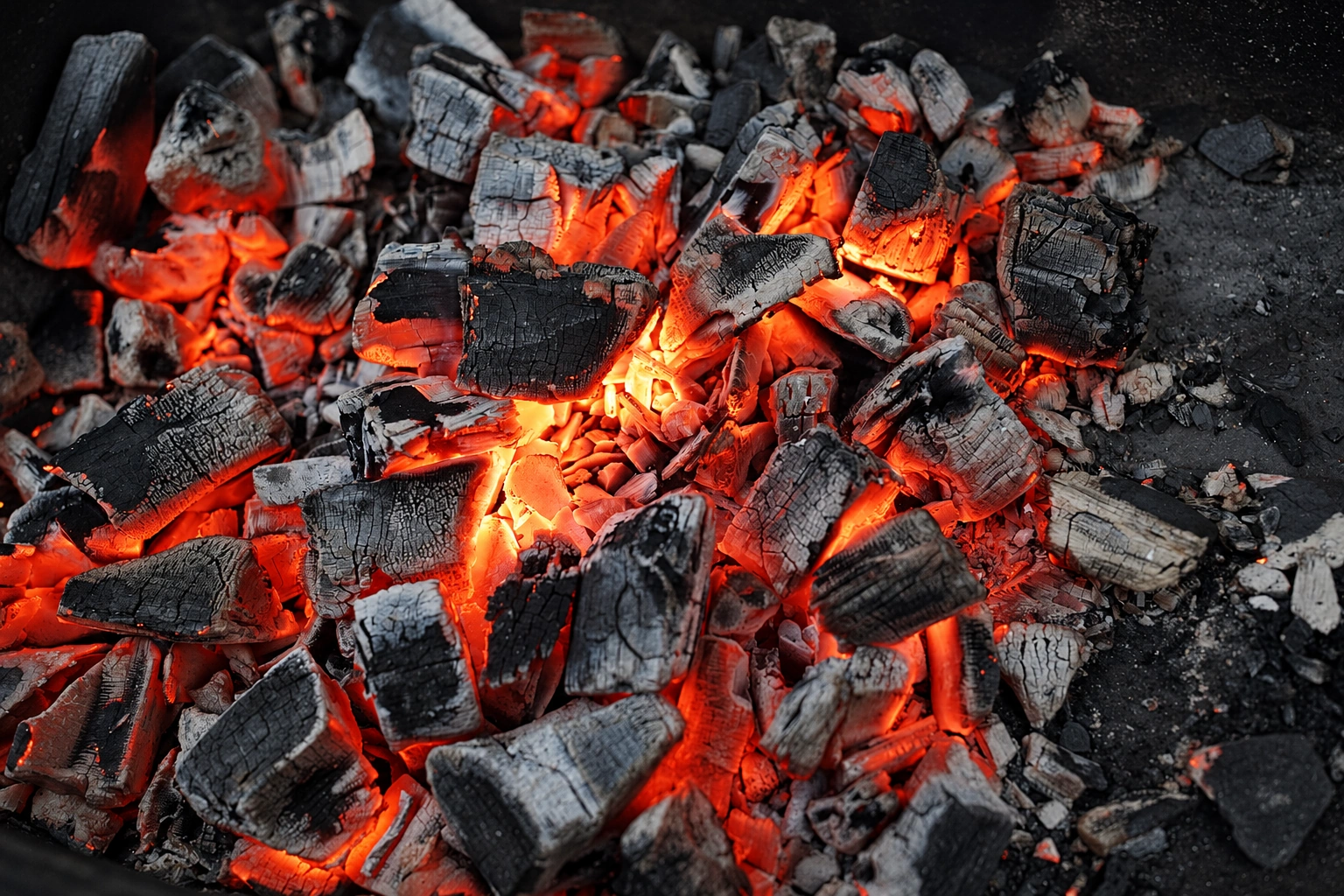
Biochar is a carbon-rich material made by heating biomass with limited oxygen, generally through pyrolysis, and intended for uses such as soil amendment. Its properties depend on what went in and how it was produced. Two black, porous-looking materials can behave quite differently in a field.
Charcoal is commonly produced for fuel. A barbecue product is not automatically suitable for soil, particularly when its ingredients or additives are unknown. Ash is different again: it is the residue of combustion, rather than a direct substitute for biochar.
Ask a supplier about feedstock, processing, quality testing and intended use. A clear material description is more useful than an attractive environmental claim. Traceability matters because adding something to soil is easier than taking it back out.
What can biochar do for soil?
Research describes potential benefits for moisture management, nutrient retention and other soil properties. But “potential” is an important word. Responses vary with soil type, climate, crop, application and the biochar itself. A result from one farm cannot simply be transferred to another.
For example, a soil with a specific water-retention problem presents a different question from a soil already rich in organic matter or one whose main limitation is drainage. Biochar cannot correct every management problem. Poor irrigation scheduling, compaction or an unsuitable crop choice still need attention.
Some biochars are alkaline or contain appreciable salts. That can matter greatly when the receiving soil or crop is sensitive. The aim is a better match, not a bigger dose. Soil testing should help define the problem before a material is selected.
Should biochar be mixed with compost?
Biochar and compost do different jobs. Compost contributes organic matter and nutrients as it decomposes. Biochar is generally more resistant to decomposition, although its stability and behaviour vary. Combining them can make practical sense without making either one universally necessary.
“Charging” usually means bringing biochar into contact with a nutrient-rich material, often compost, before application. Guidance from the USDA Climate Hubs discusses this preparation as a way to reduce the risk of an initial negative crop response from fresh material. Follow guidance suited to the product and soil rather than improvising a universal recipe.
Think of preparation as part of a crop protocol: material quality, moisture, handling, placement and timing belong together. A promising ingredient still needs a method. It should complement a nutrient plan, not silently replace one.
How should a farm try biochar?
Start with a small, clearly marked trial and a comparable area managed without the amendment. Keep other practices as consistent as practical. Record the material, amount, application method and date. Without those basics, a promising-looking patch is difficult to learn from.
Choose observations that answer the original question. If moisture is the concern, record moisture and irrigation alongside weather. If crop performance is the concern, record relevant growth and harvest measures, costs and other changes in management. Soil tests provide context; photographs provide a useful record, but neither should stand alone.
There is no application rate that this article can responsibly recommend for every site. Use product information and advice grounded in the receiving soil. Scaling should follow learning. It is perfectly useful to discover that another intervention deserves the budget first.
Is biochar automatically a climate solution?
Biochar can retain part of biomass carbon in a relatively stable form, but the climate outcome depends on the whole process. Feedstock sourcing, energy, production emissions, transport, use and what would otherwise have happened to the material all matter. A black material is not, by itself, a carbon-accounting result.
Nor does spreading biochar automatically create a verified carbon credit. Measurement and certification are separate activities with their own requirements. Claims should be specific enough to check.
For a working farm, a more immediate question may be whether responsibly available residues can become a useful amendment without creating another expensive dependency. Environmental value and practical value should be examined together. That is a stronger basis for a decision than novelty alone.
From a Firefly living lab
At Yemmegundi, the question starts with what is already there.
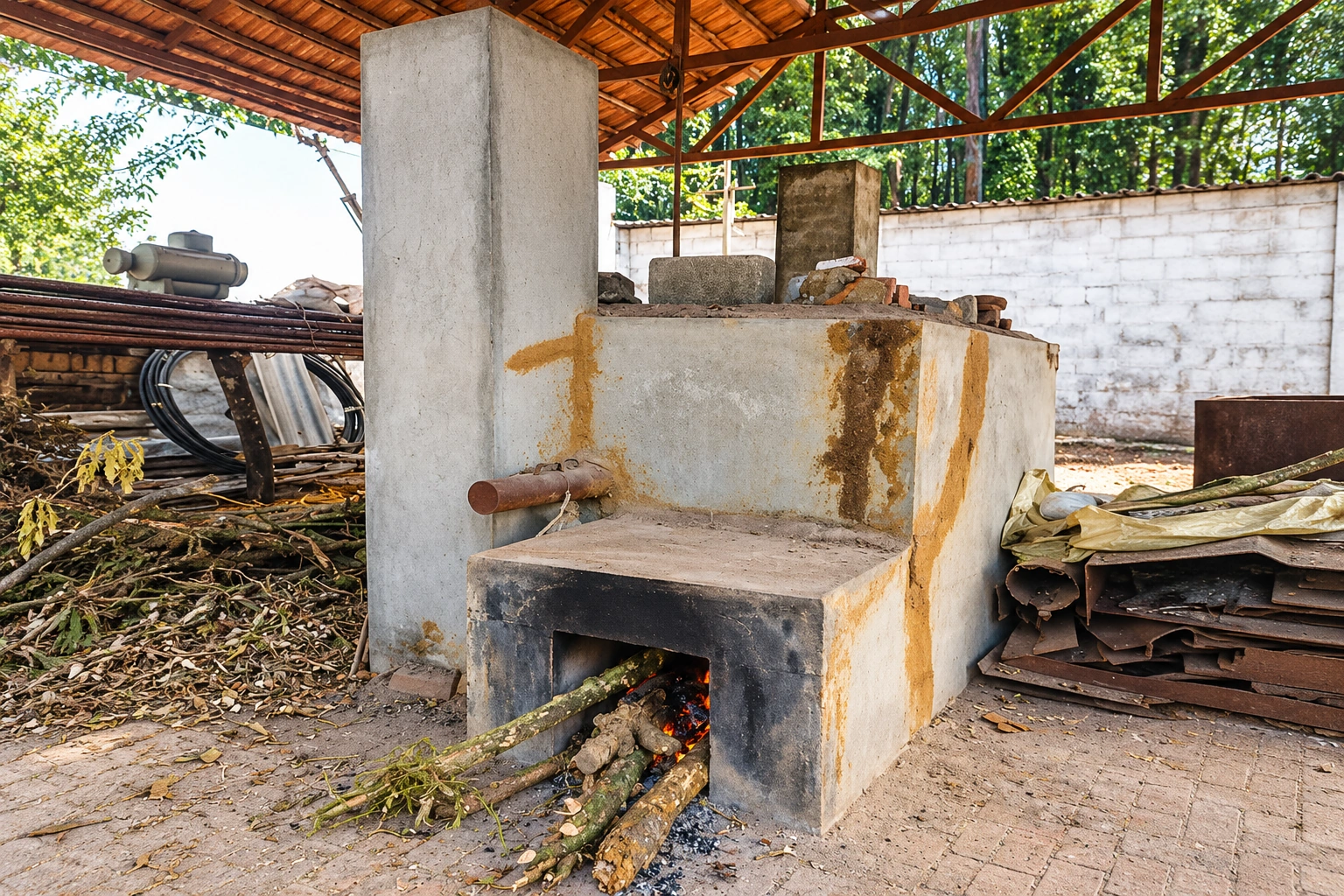
At Firefly’s Yemmegundi Estate, pruned material and fallen branches are used in biochar production through an Adam’s Retort. Biochar sits alongside vermicomposting and biological inputs within a wider regenerative practice. It is one part of managing the estate’s resources, rather than a stand-alone promise of better yields.
That distinction matters. A useful loop connects an available material with a real need and an operating method. It also leaves room to ask whether the material has other ecological uses and whether the receiving soil actually benefits.
Explore the living lab ↗Practical questions
Can biochar replace fertiliser?
Not as a blanket rule. Nutrient content and availability vary, and the crop still needs a suitable nutrition plan. Treat biochar as a possible amendment whose purpose must be defined.
Will biochar improve every soil?
No. Soil conditions, the material and the wider management system influence the result. Testing and a modest trial are more informative than a universal success claim.
What should I ask a supplier?
Ask for the feedstock, relevant quality and contaminant testing, pH and other available material properties, recommended uses and application guidance. Then compare those answers with your soil and objective.
Sources & further reading
General guidance draws on the sources below. Firefly field notes describe the company’s own sites; they do not imply that results transfer unchanged to another property.