In 30 seconds
- Plants are part of treatment. So are microbes, media and the way water moves.
- A wetland needs a design matched to the wastewater, land and intended outlet.
- Reuse decisions need water-quality evidence, not simply clearer-looking water.
We tend to notice water twice: when there is too little of it, and when there is nowhere for it to go. Between those moments lies a design opportunity. A farm, school or estate can ask what its water could support before deciding how to dispose of it.
Constructed wetlands turn that question into infrastructure. They use designed wetland conditions to help treat wastewater. Their appeal is easy to understand: an essential service can belong to a living landscape. But a planted bed is not automatically a treatment system. What happens beneath the surface matters as much as what grows above it.
What is a constructed wetland?
A constructed wetland is an engineered system that uses wetland vegetation, supporting media and microbial processes to improve water quality. Unlike a natural wetland, it is deliberately designed around a particular flow and treatment purpose. Natural wetlands should not be treated as convenient dumping grounds.
Different designs keep water above the surface or move it through gravel or other media below it. Some combine stages. Choosing between them depends on the wastewater, available space, treatment targets and operating conditions. There is no single planting plan that answers every site.
The useful distinction is between an attractive water feature and accountable treatment. A treatment system has a defined inlet, a designed pathway and an outlet whose quality can be checked.
How do constructed wetlands treat wastewater?
Several processes work together. Solids may settle or become trapped. Microorganisms break down some organic pollutants. Surfaces and media can hold or transform certain substances, while plants help create the physical and biological conditions in which treatment happens. Performance depends on the design and the substances present.
The plants are therefore collaborators, not a magic cleaning ingredient. More greenery does not necessarily mean better treatment. Water must reach the treatment zones, remain in the system for an appropriate period and avoid shortcuts that bypass useful contact.
Pretreatment is often essential. Screening, settling or other upstream stages can keep excessive solids, grease or unsuitable loads from overwhelming the wetland. Further treatment may also be required before the water meets its intended use. The entire sequence needs to be designed together.
Where can a constructed wetland work?
Farms, estates, institutions and hospitality sites may have both wastewater to manage and space in which to treat it. That combination makes a wetland worth investigating. It does not establish suitability on its own. A small constrained site, a highly variable industrial stream or a demanding reuse target may require a different approach or a combined system.
Start with an honest water account. How much arrives each day? When does the peak occur? What changes during rainfall, production or occupancy? What does testing show about its composition? Then establish what the treated water is expected to do.
Land is an operating resource, not simply an empty patch on a plan. Slope, access, soil conditions, nearby water bodies and room for maintenance all affect the decision. Choosing a system before understanding these constraints reverses the useful order of work.
What does maintenance involve?
Living systems need care. Inlets and outlets need inspection; accumulated solids need management; plants and flow paths need attention. Someone must notice a blockage, unusual smell or change in water level and know what to do next. “Natural” should never become shorthand for “nobody is responsible.”
The relevant comparison is the whole operating arrangement: land, construction, energy, servicing, testing and the skills available locally. A low-energy system can still fail when ownership is unclear. A simple maintenance record often does more good than an impressive opening-day photograph.
For a school or estate, the practical question is who will look after it during holidays, heavy rain or the busiest production weeks. Design should make those ordinary realities easier to manage.
Can treated wetland water be reused?
Potentially, but the answer belongs to testing and the intended use. Water for irrigation, landscape watering or another purpose can require different safeguards. Clear water is not necessarily safe water, and visual improvement cannot establish regulatory compliance or drinking-water suitability.
A monitoring plan should compare inlet and outlet conditions and record when samples were taken. Depending on the wastewater and use, relevant measures may include pH, organic loading, suspended solids, nutrients and microbial indicators. A qualified practitioner should select the tests and interpret the results.
Good reuse planning also asks whether demand exists when treated water is available. A storage or distribution gap can undo an otherwise useful treatment investment. Cleaning water and finding a responsible use for it are parts of the same task.
From a Firefly living lab
At Yemmegundi, the wetland belongs to the estate.
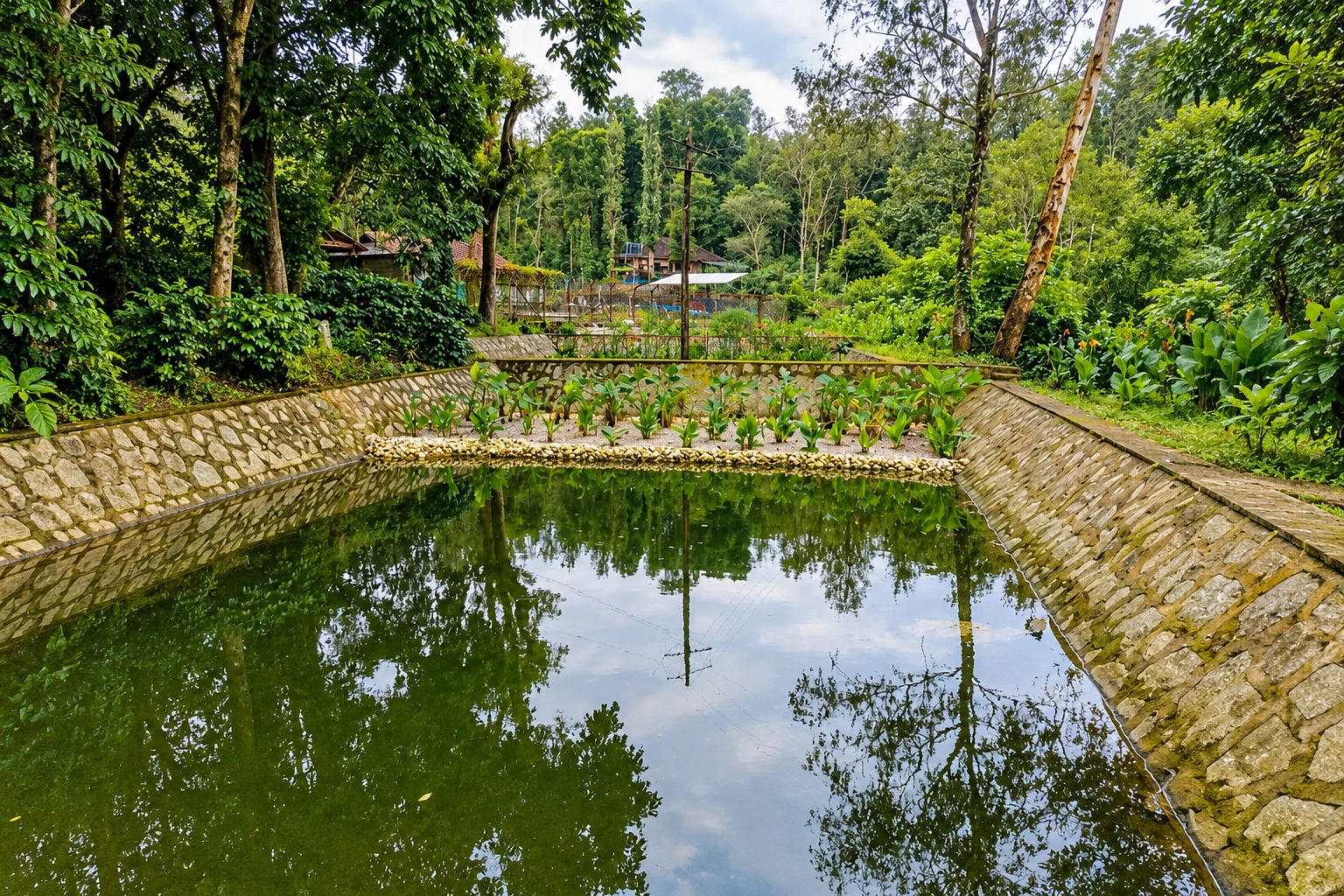
At Firefly’s Yemmegundi Estate in Coorg, acidic coffee-pulping effluent is routed through a living treatment system. It sits within a wider practice that includes cultivation, composting and biochar. The lesson is not that every estate needs an identical wetland. It is that production and treatment should be designed in the same conversation.
Coffee processing changes the water that leaves the estate. That makes seasonal loads, upkeep and water-quality checks central to the work. A landscape can participate in treatment without turning treatment into a decorative claim.
Explore the living lab ↗Practical questions
Do wetland plants clean the water on their own?
No. Plants, microorganisms, media and water movement operate together. Selecting an attractive aquatic plant is not a substitute for designing and verifying the treatment process.
Can I choose a system from a photograph?
A photograph can show the landscape character. It cannot show wastewater composition, loading, hydraulic performance or outlet quality. Those are the details that determine whether a design fits.
What should I bring to the first site discussion?
Bring available water tests, approximate daily flows, seasonal changes, a site plan and the intended use or discharge destination. Unknowns can then become an investigation plan.
Sources & further reading
General guidance draws on the sources below. Firefly field notes describe the company’s own sites; they do not imply that results transfer unchanged to another property.